The heart of the internet
Osteoporosis is a condition in which your bones become weak and brittle. This increases your risk of fractures, chronic pain, and decreased mobility. Bassey, E. J., Rothwell, M.C., Littlewood, J.J., & Pye, D.W. Pre- and postmenopausal women have different BMD responses to the same high-impact exercise. I offer several strength training for osteoporosis products. The first product is my book, Exercise for Better Bones, and the other is a workout series in streaming video format.
Study selection and data extraction
“Bone and cartilage are a use-it-or-lose-it situation,” Jojo Kelly, CPT, and head coach at Tone House, tells SELF. “Contrary to what many people believe, running and jumping actually promote healthy bones and cartilage.” That checks off cardio. Always get cleared by a doctor before you start a new exercise program if you’ve been diagnosed with osteopenia or osteoporosis.
Weight-bearing exercise for strong bones

Future research should aim to minimize these biases by broadening language inclusion criteria and enhancing reporting transparency. Given these limitations, the results of this meta‐analysis should be considered preliminary and warrant confirmation through additional high‐quality clinical trials. For middle aged and older adults one of the primary health goals of an exercise program is to maintain bone density. Without an exercise intervention, after the age of 40, bone mass decreases by about 0.5% per year, regardless of sex or ethnicity (15).
- Network meta-analysis is a method that allows for the simultaneous comparison of many intervention methods in a single study.
- This study employed a rigorous and systematic search strategy to identify relevant papers from databases, retrieving a total of 4664 articles.
- It’s also important to work on strength, flexibility and balance.
- Consider activities like walking, jogging, dancing, hiking, and strength training to keep your workouts diverse and enjoyable.
- Engaging in regular weight-bearing exercise offers numerous benefits for bone health, overall fitness, and quality of life.
- In addition, imbalances in network structure (e.g., fewer direct comparisons of WBV and TC) may affect the accuracy of indirect comparisons.
Do women lose bone density and muscle mass as they age?
This study employed meta-analytic methods to evaluate the effects of varying resistance‐training parameters on bone mineral density in postmenopausal women. The number of included studies was small, and some subgroup analyses were based on only a few eligible trials, precluding reliable conclusions. Although subgroup analyses were conducted to identify potential sources of heterogeneity, significant variability persisted across subgroups, which may compromise the accuracy of the pooled effect estimates and limit their generalizability. Notably, the literature search and selection process were restricted to English‐language publications, potentially omitting important findings published in other languages and introducing language bias. Furthermore, published studies may be subject to publication bias, as trials with significant results are more likely to be published, whereas those with null or negative findings may remain unpublished.
Exercise Considerations
This is particularly important for preventing osteoporosis, a condition characterized by weak and brittle bones. My roommate has mentioned to me several times now that I should get into lifting to increase bone density while we still can (we’re both 24). The problem is that I have no desire to lift (I find it boring, I hate needing to go to a gym, it’s just not my vibe, etc.). I’m wondering if other forms of strength training (such as pilates, yoga, barre, bodyweight fitness, etc.) will also help improve bone density, or if “lifting heavy” is really the only way.
Are there low-cost and easy strength training exercises to do at home?
If you do not regularly https://www.youtube.com/shorts/3KWhh1V12KU strength train, you will begin losing as much as 3% of your muscle mass per year. Both Pilates and yoga have elements of strength training depending on the type. PRISMA flow diagram of the selection process of the included studies. It’s important to consult with a healthcare professional or certified trainer, especially if you have any underlying medical conditions or are new to exercise. Strength training also offers protection against many of the most common chronic diseases of aging.
min Bone Health: Level 2
However, for LS, omission of one study [37] produced a significant shift in the overall pooled estimate; and for Troch, exclusion of two studies [22, 23] likewise led to a significant change in the pooled effect. It should be noted that, compared with the other outcomes, the LS and Troch results are less stable. You can do these against a wall, on bent knees or on the floor.
“But Isn’t Heavy Lifting Dangerous with Osteoporosis?”
“For example, lying on your back and doing leg lifts will get you stronger, but it’s not going to stimulate bone density as well,” he explains. Certain health conditions like hormone, digestive, and eating disorders, as well as some medications, can also lower bone density, per the NLM. In other words, “when bones are less dense, they become more brittle and are more at risk to fracture,” says Hannah Solomon, a physical therapist and certified orthopedic manual therapist at Hospital for Special Surgery. When you lose bone density, the “walls” of the honeycomb get thinner, according to the National Institute of Aging (NIA).
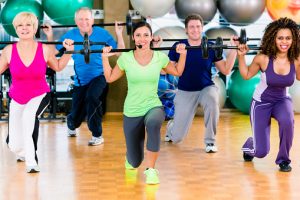
Standing Military Press with Weight
We systematically searched PubMed, Embase, Web of Science, and the Cochrane Library for studies evaluating the impact of resistance training programs on BMD in postmenopausal women, covering all records up to March 2025. Two reviewers independently screened the studies, extracted data, assessed the risk of bias using the Cochrane Handbook, and performed the meta-analysis using RevMan 5.4 and Stata 18 software. Research suggests that high intensity resistance programs (lifting heavier weights) may be more effective for improving bone density than low intensity exercise programs. Compound movements are exercises that work multiple muscle groups and joints at the same time, Kelly says. Because they recruit more muscles and allow you to move heavier loads, they’re especially effective for building strength, improving coordination, and placing the kind of stress on your bones that helps support bone density. To help you put this into practice, we’ve included a bone-strengthening workout, created by Kelly, that combines both impact and resistance training—two of the most effective ways to stimulate bone growth and slow down bone loss.
How Much Weight Do You Need to Add to Strengthen Your Bones?
The results of the study indicated that the intervention of exercise had a significant effect on improving BMD in both the lumbar vertebra and femur neck. However, the benefits of various exercise modalities varied. The combination of AE + RT and RT had a notable and favorable impact on bone mineral density in the lumbar vertebra and femur neck of PMW, surpassing the advantages of alternative treatments.